
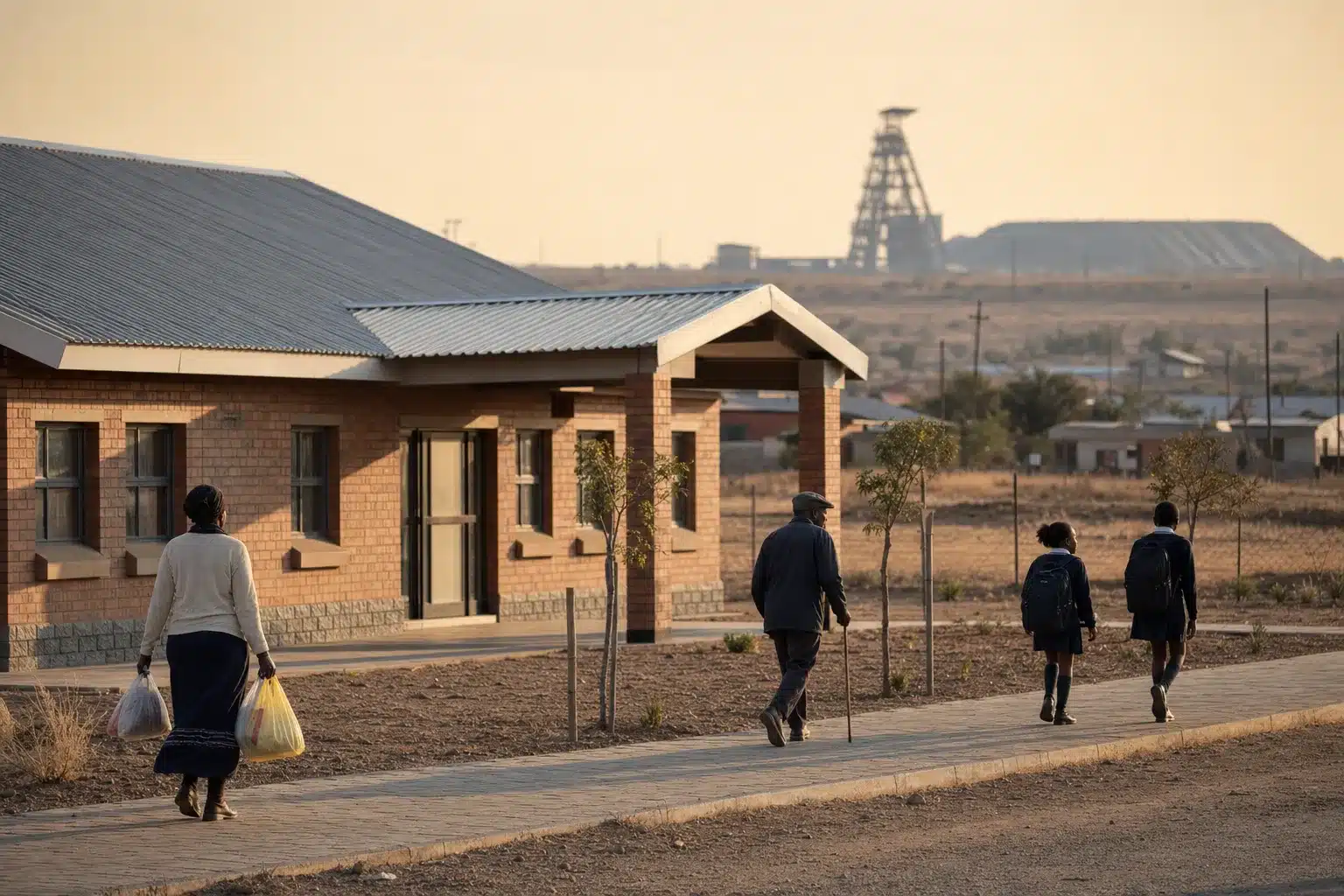
An SLP compliance audit tests whether a mining company has delivered what its approved Social and Labour Plan promised: the bursaries, the clinic, the supplier spend and the community meetings, each backed by evidence a regulator would accept. It runs parallel to the empowerment rules covered in our guide to sector codes and their latest updates, but it answers to a different department and a different statute.
Most mines report on their plans every year. Far fewer can prove every line of that report. A regional inspector who asks to see the handover certificate for a school block, or the bursary agreement behind a headcount, quickly finds out which kind of mine they are dealing with.
This guide explains where the obligation comes from, what an independent review actually tests, which evidence holds up and what is at stake when the Department of Mineral and Petroleum Resources finds the gaps before you do.
Quick Answer
SLP compliance audit work is an independent, evidence-based check of a mining right holder’s performance against its approved Social and Labour Plan. The plan is required by the Mineral and Petroleum Resources Development Act (MPRDA) and its regulations, and it covers human resources development, local economic development, the management of downscaling and retrenchment, and the money set aside for each. The review compares every commitment with actual spend and outputs, tests the evidence behind it, checks the three community meetings a year that the regulations require, and flags any change made without the Minister’s consent.
Annual report due soon and not sure every figure in it would survive an inspector’s follow-up question? Have the evidence tested before you submit →
What an SLP Compliance Audit Actually Tests
Strip away the jargon and the exercise asks one question of every commitment: did it happen, and can you prove it? An approved Social and Labour Plan is a schedule of promises with names, numbers, budgets and dates attached. The review takes each promise and looks for the documents that show it was kept.
That sounds simple. In practice a five-year plan for a mid-sized operation can contain well over a hundred separate commitments, spread across training, recruitment, enterprise development, infrastructure, housing and closure planning. Each sits with a different internal owner, and each produces its own trail of paper.
A thorough review works through four layers. Spend: did the money budgeted for each project actually leave the company, and did it go where the plan said? Outputs: was the clinic built, were the bursaries awarded, did the learners finish? Process: were the community meetings held, minuted and fed into the annual report? Change control: was every deviation from the approved plan authorised before it happened?
What it does not do is grade the company on intentions. A progress percentage on a dashboard, a photograph of a ribbon-cutting or a paragraph in the integrated report is not evidence. Anyone trained in financial reporting will recognise the principle at once: an assertion is only as good as the source document behind it.
For the wider picture of what these plans contain and how they are drafted, our guide to Social and Labour Plans in mining covers the structure in full. This article stays with the testing.
Where the Obligation Comes From
Social and Labour Plans are not voluntary corporate social investment. They are a condition of holding a mining right, built into the MPRDA itself.
Section 23 makes a prescribed Social and Labour Plan one of the conditions for granting a mining right. Section 25(2)(f) then obliges every holder to comply with the requirements of that plan for as long as the right exists. Section 28 requires holders to submit annual reports, and the department’s guidelines expect those reports to show how far the holder has delivered on the plan.
The detail sits in the MPRDA Regulations. Regulation 46 sets out what every plan must contain, and that list maps neatly onto what a reviewer needs to test.
| Part of the plan | What regulation 46 requires | What the review looks for |
|---|---|---|
| Human resources development | A skills development plan, career progression, mentorship, internships and bursaries, and employment equity statistics | Training records, bursary agreements, appointment letters and equity reports |
| Local economic development | Infrastructure and poverty eradication projects aligned with municipal Integrated Development Plans, housing and living conditions, and procurement from historically disadvantaged South Africans | Invoices, project close-out reports, signed handover certificates and supplier spend data |
| Downscaling and retrenchment | A future forum, mechanisms to save jobs, alternatives to job losses and measures to soften the impact of closure | Forum minutes, documented processes and retraining plans |
| Financial provision | Money set aside to implement each of the programmes above | Budget against actual spend, per project and per year |
The 2020 amendments to the regulations tightened the rules considerably. Regulation 45 now requires an annual report on the approved plan to go to the Regional Manager, and obliges holders to convene at least three meetings a year with mine communities and interested and affected persons. The outcomes of those meetings must form part of the annual report.
Approved plans must now be published within 30 days, in English and one other language dominant in the mine community. Any amendment needs the Minister’s consent. Under regulation 46B, every plan is reviewed five years after approval, and the Minister must weigh the holder’s track record and the annual reports already submitted.
Regulation 45 sets no calendar deadline for the annual report. In practice the reporting year and due date are fixed in the approved plan or by the regional office, so one of the first things a reviewer confirms is which date applies to you. The department’s revised Social and Labour Plan guidelines of October 2010 add that a Regional Manager may ask for a progress report at any time.
Does the 2018 Mining Charter Still Bind You?
Many plans were drafted with one eye on the Broad-Based Socio-Economic Empowerment Charter for the Mining and Minerals Industry, gazetted on 27 September 2018. Its human resource development element asks holders to invest at least 5% of the leviable amount in skills development. Its mine community development element states plainly that such contributions do not replace Social and Labour Plan commitments.
On 21 September 2021 a full bench of the High Court in Pretoria ruled, in a case brought by the Minerals Council of South Africa, that the 2018 Charter is a policy document rather than binding law. It set aside several clauses, including the ownership rules on renewal and transfer, the procurement and supplier development targets, and the penalty provisions. The department confirmed in November 2021 that it would not appeal.
That ruling does not make the plan optional. The duty to deliver an approved Social and Labour Plan comes from section 25 of the Act and from the regulations, not from the Charter. The Minister can also write Charter principles into the terms and conditions of a mining right, and where that has happened they bind the holder through the right itself.
Change is on the horizon. A draft Mineral Resources Development Bill, published for comment in May 2025, is intended to replace the MPRDA. Until a new Act is passed and in force, reviews test against the current Act, the 2020 regulations and each holder’s approved plan.
The plan binds you even where the Charter does not
The 2021 judgment changed the legal status of the 2018 Charter. It did not touch section 25(2)(f) of the MPRDA, which obliges every mining right holder to deliver its approved Social and Labour Plan. Treat the Charter as context, and treat the approved plan, together with every authorised amendment, as the document you will be measured against.
Running an SLP Compliance Audit, Commitment by Commitment
Good reviews follow the same discipline as a financial statement engagement: build the population, test it against source documents, then report the exceptions. Here is how that works for a Social and Labour Plan.
Build the commitment register
Start with the approved plan, not last year’s report. Every commitment goes into a single register with its budget, target, deadline, internal owner and the evidence that would prove it. Amendments the Minister has approved are added. Changes that were never approved are flagged immediately.
This step alone often explains why annual reports drift. Over five years, teams change, project names change and the report starts describing what the company is doing rather than what it promised.
Trace the money
Each local economic development and training budget line is traced to the general ledger, then to invoices, payment records and contracts. The reviewer checks that the spend landed in the right year, on the right project and with the right beneficiary. Costs moved between projects, or booked to a project after it closed, are a frequent finding.
Test the outputs
Spend proves effort, not delivery. For infrastructure, the reviewer looks for completion certificates, a signed handover to the municipality or receiving institution, and confirmation that the facility is actually in use. For training, it means attendance registers, assessment results, certificates and a name behind every headcount.
Site visits matter here. A clinic that was handed over but never staffed, or a water scheme whose pump failed within months, is technically delivered and practically useless. An honest annual report should say so.
Check the consultation trail
The regulations require at least three meetings a year with mine communities and interested and affected persons. The review checks notices, attendance registers, minutes, the issues raised and how each one was answered. It also confirms that the outcomes made it into the annual report, as regulation 45 requires.
Review downscaling readiness
This is the section most teams treat as boilerplate. The reviewer asks whether the future forum actually meets, whether job-saving mechanisms are documented, and whether the plan for softening the impact of downscaling would work if production fell next quarter.
Rate and report the findings
Every exception is rated by risk: what a regional inspector would make of it, what it would mean at the five-year review, and how hard it is to fix. The report ends with an action list, named owners and a clear view on which figures in the annual report can be signed off and which cannot.
Halfway through a five-year cycle and unsure how much of the original plan is still on track? Ask us for a mid-cycle evidence review →
Evidence That Stands Up, and Evidence That Does Not
Most findings come down to the quality of the paper trail. Here is the difference between what teams tend to file and what an independent reviewer, or a regional inspector, will accept.
| Commitment | Weak evidence | Strong evidence |
|---|---|---|
| Bursaries and learnerships | A headcount in a spreadsheet | Signed agreements, fee invoices, academic results and proof of payment |
| Community infrastructure | Progress photographs and a press release | Completion certificate, signed handover and proof the facility operates |
| Procurement from historically disadvantaged suppliers | Total spend against a supplier list | Invoices tied to supplier ownership records valid for the period |
| Community meetings | A calendar entry | Notice, attendance register, minutes, issues log and responses |
| Portable skills training | A training provider’s quotation | Attendance registers, assessment results and certificates per learner |
| Changes to projects | An internal email approving the switch | The Minister’s written consent to the amendment |
Weak evidence records an intention or an activity. Strong evidence records a result, and it carries a signature or a transaction that someone outside the company can check.
Alignment with the municipality deserves a special mention. The regulations expect infrastructure and poverty eradication projects to line up with the local Integrated Development Plan. A strong file shows the IDP reference for each project, plus correspondence confirming that the municipality still wants the asset and will maintain it once it is handed over.
Supplier records need the same care. A procurement commitment to historically disadvantaged suppliers is only as credible as the ownership documents behind each supplier, and those documents expire. A list compiled three years ago proves very little about this year’s spend.
What Happens When the Department Finds the Gaps First
The consequences escalate, and they are far more serious than a qualified paragraph in a sustainability report.
At the lighter end, the department can issue a notice or directive under section 93 of the MPRDA requiring corrective action. In a September 2024 parliamentary reply, the Minister noted that operations can be suspended until the shortfall has been addressed.
At the heavier end, section 47 allows the Minister to suspend or cancel a mining right where the holder breaches a material term or condition of the right, or operates in contravention of the Act. The holder must first receive written notice and a reasonable opportunity to respond, which is exactly when a complete evidence file earns its keep.
Then there is the five-year review. Under regulation 46B, the Minister must consider past delivery and the annual reports already submitted when reviewing the plan. A thin evidence file today becomes a weaker negotiating position at the next review.
Commercial pressure usually arrives sooner than legal action. Lenders, offtakers and investors increasingly ask for proof of delivery against social commitments, and undelivered promises feature regularly in community grievances in mining areas. In October 2025, Parliament’s mineral resources committee floated the idea of an independent body to monitor how mines implement their plans. Scrutiny is rising, not falling.
Where Social and Labour Plan Spend Meets the Scorecard
Mining groups often run two transformation reporting lines at once. The operating mine reports on its Social and Labour Plan to the department, while the group may also need a B-BBEE certificate under the Codes of Good Practice for customers, tenders or a non-mining parent. Our guide to empowerment rules for mining companies sets out how the two frameworks sit side by side.
The same activity can feed both, but only if it meets both sets of rules. A bursary scheme for black learners may support the human resources development programme in the plan and also count as skills spend under the Codes, which measure training for black people against a target of 6% of the leviable amount. Our overview of the skills development element explains how that target is scored.
Community projects work the same way. Under the Codes, socio-economic development contributions are measured against a target of 1% of net profit after tax, and full recognition requires at least 75% of the value to benefit black people. A local economic development project may meet that test, as our guide to socio-economic development explains, but the verification agency will want evidence on its own terms.
The practical lesson is evidence discipline. One spend record, one beneficiary list and one handover certificate can serve both the department and the verification agency, provided the file is built to the stricter of the two standards. Reporting the same rand in two places without a clear paper trail invites questions from both directions.
An SLP Compliance Audit in Numbers
The figures below are an illustrative composite drawn from mid-tier opencast mandates in Limpopo, not a single client. The operation’s approved plan carried a five-year local economic development budget of R18 million, and the review took place in year four, ahead of the five-year review.
| Measure | Before the review | After remediation |
|---|---|---|
| Local economic development spend traced to invoices | R9.4 million, or 52% of budget | R16.9 million, or 94% of budget |
| Bursaries with signed agreements on file | 6 of 11 claimed | 11 of 11 |
| Community meetings in the reporting year | 1, with no minutes kept | 3, each minuted with attendance registers |
| Projects changed without the Minister’s consent | 2 | 0, with an amendment request lodged |
| Infrastructure projects with a signed handover | 1 of 4 | 4 of 4 |
| Time to prepare the annual report | 9 weeks | 3 weeks |
Most of the improvement came from finding and filing evidence that already existed, not from new spending. Two projects needed genuine remediation: a water scheme that had been swapped for a road upgrade without consent, and a school block that was finished but never formally handed over to the provincial education department.
Most gaps are filing gaps, until they are not
In a typical review, the bulk of exceptions are documents that exist somewhere in the business but were never linked to the plan. Those are cheap to fix. The expensive findings are unapproved changes and assets that were never handed over, because putting them right needs the department, the municipality or both to act.
Who This Is NOT For
Explorers without a mining right. The Social and Labour Plan obligation attaches to the mining right. If you are still drilling and testing a resource, this review is premature.
Contractors and suppliers to mines. You may help deliver a client’s plan, but the obligation and the reporting sit with the right holder. Your exposure runs through your contracts.
Teams wanting a report that confirms what they have already told the department. An independent review will find exceptions. If the goal is reassurance without scrutiny, this is the wrong exercise.
Operations already responding to a section 47 notice. At that stage, mining law counsel should lead the response. An evidence review can support them, but it cannot replace legal advice.
Who this does suit: mining right holders approaching an annual report or a five-year review, groups preparing for a transaction or a lender’s due diligence, and boards that want independent comfort on social commitments before they sign off the integrated report.
How Insignis Audits an SLP Before the Department Does
We build the file the way a regional inspector would read it. Every commitment in the approved plan, plus every authorised amendment, goes into one register with its budget, deadline, owner and required evidence. Nothing in the annual report is accepted on the strength of a summary or a status colour.
From there the work is forensic rather than presentational. We trace spend to the ledger and invoices, test outputs against handover certificates and training records, and check the community meeting trail against regulation 45. Each exception is rated by regulatory risk and remediation effort, so management knows which issues to fix this quarter and which can wait.
Because the same evidence often supports a B-BBEE verification as well, we align the file with your scorecard records and flag any risk of reporting one rand twice. Our Social and Labour Plan reporting team supports mining right holders from the first commitment register through to the annual submission and the five-year review.
For the primary source, the Mineral and Petroleum Resources Development Act as published in the Government Gazette sets out sections 23, 25 and 47 in full. Read it alongside the 2020 amendments to the regulations, which govern reporting, publication and review.
Five-year review on the horizon and the original plan was written by people who have since left? Let us rebuild the commitment register with you →
Frequently Asked Questions
Is an independent SLP audit required by law?
No law requires a third-party review. The MPRDA and its regulations require an annual report on the approved plan, and the department may inspect or ask for a progress report at any time. Many holders commission an independent review so that the figures they submit have been tested before the regulator sees them.
Who receives the annual Social and Labour Plan report?
It goes to the relevant Regional Manager of the Department of Mineral and Petroleum Resources. Regulation 45 requires the report every year, and the outcomes of at least three community meetings a year must form part of it. The reporting year and due date are usually fixed in the approved plan or by the regional office.
Can a mining right be cancelled for failing to deliver the plan?
Yes, in serious cases. Section 25(2)(f) of the MPRDA obliges holders to comply with their approved plan, and section 47 allows the Minister to suspend or cancel a right for breach of a material term or condition, after written notice and a chance to respond. Lesser shortfalls are usually handled through section 93 directives first.
Does the 2021 court ruling on the Mining Charter affect these plans?
Not directly. The High Court held that the 2018 Charter is policy rather than binding law, but the duty to deliver an approved Social and Labour Plan comes from the MPRDA and its regulations. The Minister can also impose Charter principles as conditions of a mining right.
Can we change a project in our approved plan?
Yes, but only with the Minister’s consent, which the 2020 amendments to the regulations made explicit. Collaboration with other mines on shared projects also needs consent where it changes the approved plan. Swapping a project informally, even for a better one, will show up as an exception in any review.
Can Social and Labour Plan spend also count on a B-BBEE scorecard?
Sometimes. Bursaries for black learners or a community project may also qualify as skills development or socio-economic development spend under the Codes, provided they meet those rules. Each framework has its own evidence standard, so build the file to satisfy both.
Know where your plan stands before an inspector asks
An SLP compliance health check tests a sample of commitments from your approved plan against invoices, registers and handover records. You receive a rated list of exceptions in fix-first order, and a clear view of which figures in your next annual report are safe to sign and which need work.
No obligation. We will get back to you within 24 hours.
Request a health check
Dr. Este Welman, CA(SA)
Founding Partner, Insignis Solutions
Dr. Welman is a Chartered Accountant holding a PhD in Economic Transformation from the Da Vinci Institute, an M.Comm in Tax from North-West University, and a B-BBEE Management Diploma from Wits. She tests every Social and Labour Plan commitment against an invoice, a register or a signed handover, and never against a progress slide.